Google Proxies: SERP Checks, Scraping, and Safer Search Testing

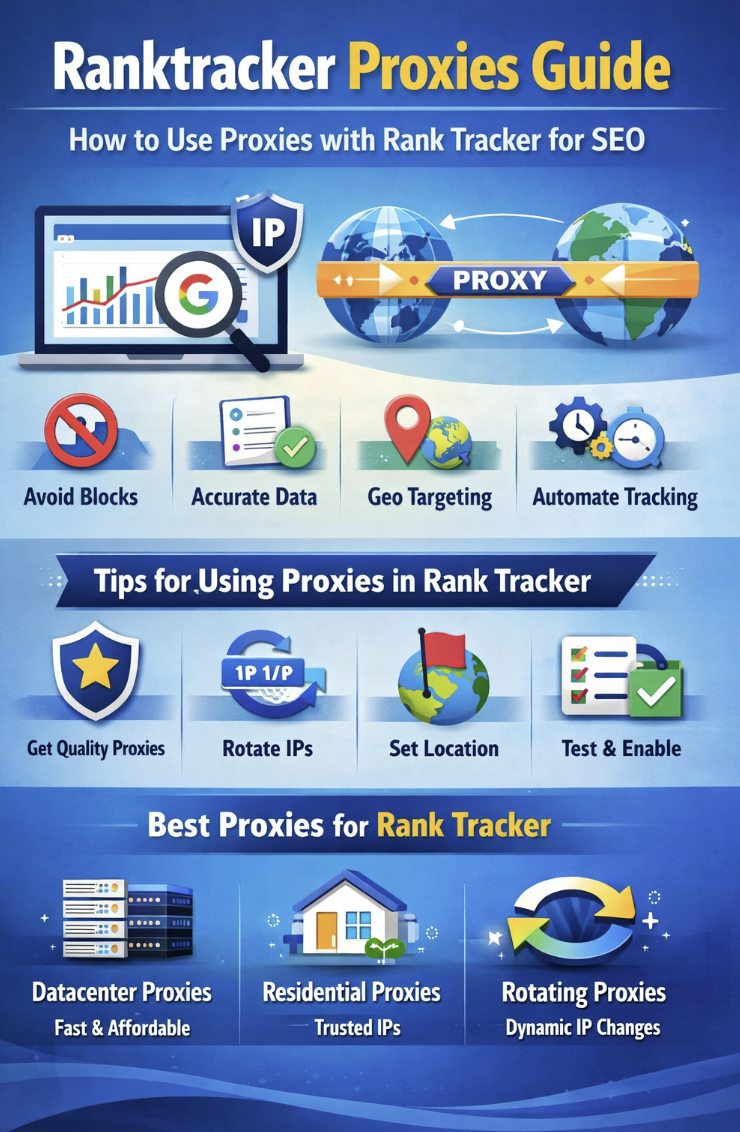
Google proxies help with SERP monitoring, keyword checks, ad verification, and public search research when you need results from another location or a cleaner testing setup.

Proxies do not remove the need for responsible request rates and good data collection practices. Google can rate-limit unusual traffic, so clean tooling matters as much as proxy choice.

Google proxies: What This Guide Helps You Decide

If you are searching for Google proxies, you probably need more than a definition. You need to know when this proxy setup makes sense, what type to choose, how to test it, and what problems to avoid before you use it for SEO, scraping, browsing, accounts, or automation.

This guide also answers the close follow-up questions people usually have around Google proxy, SERP proxy, Google scraping proxy, and rank tracking proxy, so the article is useful even when the exact search phrase is slightly different.

Last reviewed: June 2026. The guidance focuses on practical proxy selection, setup testing, measurement, and responsible use rather than search-engine tricks.

Short Answer

Google proxies help with rank tracking, SERP checks, scraping, and market research when location control and repeatability matter. The best results come from clean request pacing, logging, retries, and consistent reporting settings.

Fast Facts

Decision point Best-practice answer
Best fit Google proxies are best for SERP checks, public data collection, rank tracking, competitor research, and market monitoring.
First test Run a small keyword or URL set, keep country and device signals consistent, and record block rates.
Avoid when Do not use proxies to overload websites, ignore robots rules, or collect poor-quality data faster.
Measure success Track clean responses, SERP consistency, block rate, retry rate, location control, and data completeness.

Topic Map

Entity How it fits this guide
Main topic Google proxies
Proxy role Supports cleaner SERP checks, public data collection, and reporting with location and request control.
Related concepts Google proxy, SERP proxy, Google scraping proxy, and rank tracking proxy
Search intent The reader wants cleaner search, scraping, ranking, or data collection workflows.
Main caution Do not confuse bad data, rate limits, or scraping logic problems with proxy quality alone.

Related Terms in Plain English

  • Google proxy: A related proxy concept that helps clarify the right setup, use case, test process, or risk level.
  • SERP proxy: A data or SEO workflow where location control, request pacing, and clean error handling matter.
  • Google scraping proxy: A data or SEO workflow where location control, request pacing, and clean error handling matter.
  • rank tracking proxy: A data or SEO workflow where location control, request pacing, and clean error handling matter.

Questions Answered in This Article

Reader question What this article answers
What should I know before choosing Google proxies? Which proxy type, location, protocol, and stability level fit the practical use case.
What should I know before choosing Google proxy? Which proxy type, location, protocol, and stability level fit the practical use case.
How do I get cleaner SEO or data results? How to collect data or check rankings with better location control, cleaner testing, and fewer blocks.

How to Use This Information

  • Match the proxy to the job: browser access, scraping, SEO checks, account workflows, and developer tools all need slightly different setups.
  • Check location and protocol first: confirm the visible IP, HTTP or SOCKS support, authentication, and speed before scaling.
  • Measure results: track success rate, response time, blocks, challenges, and repeatability instead of judging the proxy from one test.
  • Avoid low-quality shortcuts: free or unknown proxies can create privacy, reliability, and account-trust problems.

Useful Internal and External Links

Use these links to check the proxy setup, compare related guides, and confirm technical or policy details from official sources.

Related BuyProxies resources

Official references

Quick Answer

Google proxies help with SERP monitoring, keyword checks, ad verification, and public search research when you need results from another location or a cleaner testing setup. The practical goal is to make the setup stable, measurable, and easy to debug instead of relying on guesswork.

Who This Helps Most

Google Proxies are mainly for SEO teams, data teams, agencies, and researchers who need cleaner collection, local testing, or repeatable search and scraping workflows.

The goal is not only to avoid blocks. Good proxy work makes the data more reliable by keeping location, request pace, retry logic, and error reporting under control.

Best Uses for Google Proxies

  • Local keyword ranking checks.
  • SERP scraping with careful request limits.
  • Ad and landing page verification.
  • Testing search behavior from different countries.
  • Separating SEO tools from one office IP.

Real-World Examples

Here are practical ways this guidance shows up in real work:

  • Rank tracking: An SEO team keeps country and device signals consistent so ranking reports are easier to compare over time.
  • SERP collection: A scraper uses slower request pacing, retries, and location-specific proxies to reduce noisy failures.
  • Competitor research: A business checks public pages, prices, and ads from the same market their customers use.
  • Error analysis: A data team separates proxy timeouts from website blocks, captchas, and software bugs.

Best Proxy Setup for This Job

Setup choice Best fit Watch out for
Country-specific private proxy Rank tracking, SERP checks, and localized reports Random rotation can make data noisy.
Rotating datacenter pool Larger public-data collection with backoff and retries Needs monitoring to separate blocks from proxy failures.
Sticky proxy Repeatable checks that must compare over time Not ideal for very high request volume.
Free proxy list Not recommended for serious SEO or data work Usually slow, abused, and unreliable.

Practical Scenario

A useful search or scraping test starts small. Choose one country, one device type, one keyword set or URL list, and one request pace. Collect a small sample first, remove failed pages from the dataset, and only scale after the errors make sense.

Practical Decision Check

Question Best next step Proof to look for
What data must stay consistent? Lock country, device, keyword set, language, and request pace. Changes in the data are less likely to be caused by your collection method.
Can you identify bad rows? Log redirects, captchas, empty pages, timeouts, and status codes. Failed pages can be filtered or retried without polluting the final dataset.
Is the target allowed and reasonable? Review robots rules, terms, rate limits, and the value of the data. The project has a responsible collection plan before volume increases.
How will you scale? Increase concurrency slowly and monitor block rate by proxy group. You notice weak pools before the whole job becomes unreliable.

What Good Results Look Like

  • Country, device, language, keyword set, and request pace stay consistent.
  • Failed pages, redirects, captchas, and empty responses are logged and filtered.
  • Retry rules are limited and visible in the dataset.
  • The collection method respects target-site rules and avoids unnecessary load.
  • Results are checked for data quality before the job is scaled.

How to Choose Google Proxies

Use stable country-specific proxies for rank tracking and controlled proxy pools for scraping. Random global rotation makes ranking data noisy.

  • Group proxies by country.
  • Use backoff and retry logic.
  • Record proxy location with each report.
  • Avoid free proxies.
  • Monitor block and captcha rates.

What to Check Before You Start

Check Why it matters
Proxy location The visible IP should match the country, market, or route your task needs.
Protocol support Your browser, script, or software must support the proxy type you bought.
Authentication Wrong usernames, passwords, ports, or allowlisted IPs are common causes of failed setups.
Request pace Scraping and SERP checks need throttling, retries, and block monitoring.
Report consistency Keep country, device, language, and proxy pool consistent for comparisons.

Google Proxy Workflow

  1. Choose target country and device type.
  2. Test proxies and confirm location.
  3. Run a small keyword set.
  4. Record errors and response codes.
  5. Scale slowly and keep reports consistent.

How to Measure Success

A good proxy setup should produce fewer surprises over time. Track simple signals so you can tell whether the proxy is helping or whether the real issue is the website, account, tool, or request pattern.

  • SERP consistency: the same keyword and country produce comparable reports over time.
  • Collection success: the job finishes without excessive retries or empty responses.
  • Block rate: captchas, access-denied pages, and rate limits are tracked.
  • Location control: each result is tied to the proxy country or region used.
  • Data quality: failed pages, redirects, and partial responses are filtered out.

Common Mistakes to Avoid

  • Running too many searches too quickly.
  • Mixing locations in one report.
  • Ignoring robots.txt and policy considerations.
  • Treating captcha rate as only a proxy problem.
  • Using unstable proxy pools for rank tracking.

Red Flags to Watch For

  • Country, device, keyword set, or request pace changes during the same report.
  • Captchas and blocked pages are saved as if they were valid data.
  • Concurrency is increased before the small sample is clean.
  • Robots rules, website terms, and server load are never reviewed.
  • No one can tell whether failures came from the proxy, target site, parser, or network.

Troubleshooting

Problem What to try first
The proxy does not connect Check host, port, protocol, username, password, and whether your IP must be allowlisted.
The location looks wrong Test the IP with a location checker and request a replacement if the country is not right.
Everything is slow Lower thread count, test another proxy, and compare against a simple IP-check page.
Scraping gets blocked Slow down requests, add backoff, vary timing, and separate proxy errors from target-site blocks.
Rank reports look inconsistent Keep country, device, language, keyword set, and proxy pool stable between checks.

When You Should Not Use This Setup

Do not use proxies as a shortcut around responsible scraping, search policies, or data quality checks. Clean pacing, useful logs, and respect for target websites are still required.

Related Guides and References

Related BuyProxies guides

Helpful external references

Google Proxy FAQ

Can proxies prevent Google blocks?

No. They help distribute traffic, but aggressive automation can still be limited.

What proxies are best for rank tracking?

Stable country-specific proxies are usually better than random rotation.

Should I use Google proxies for ad checks?

Yes, they can help verify regional ad and landing page behavior.

Scroll to Top