
Bulk proxy quality assurance
How to Test a Proxy List in Bulk: Speed, Authentication, Location and Blacklists
A useful bulk proxy test does more than label each line working or dead. It separates invalid syntax, DNS and connection failures, authentication responses, target-site behavior, exit location, latency and reputation signals. That structure prevents a temporary target error from condemning a healthy endpoint and prevents a fast IP with the wrong location from entering production. This guide defines a safe, repeatable testing pipeline for lists you are authorized to use.
Quick answer
What should you know first?
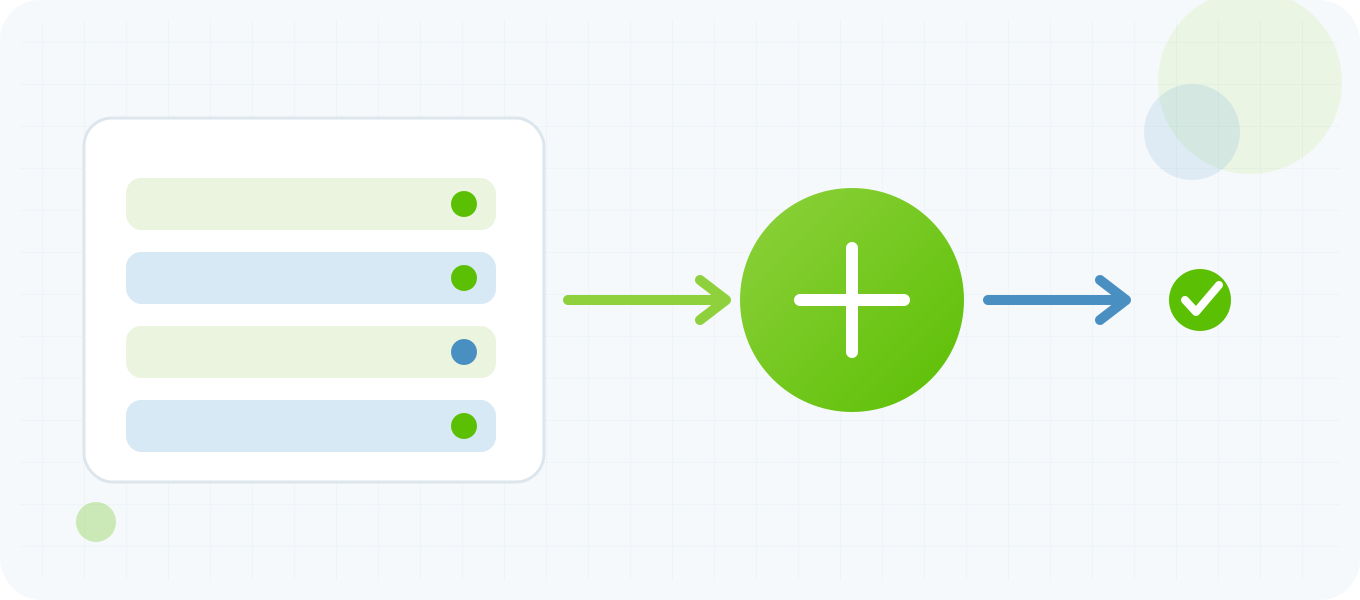
Normalize and validate the list first, then test a small sample with explicit connect and read timeouts. Expand with bounded concurrency, one controlled endpoint and clear rate limits. Record connection result, authentication status, HTTP status, exit IP, country, latency and timestamp separately. Never test unknown public lists against third-party targets or expose credentials in logs.
Define success for the real workflow before testing
A proxy can connect successfully and still be unsuitable for a project. Write down the required protocol, authentication method, target, country, maximum latency, session behavior and acceptable reputation before running the batch. Decide whether the goal is basic inventory health, country verification, target compatibility or a production readiness check. Use a service you control or an approved diagnostic endpoint for the first stage. If the final target has terms, rate limits or access controls, follow them. The test plan should state how many requests each proxy receives and when the run stops. Without this definition, a bulk tester produces numbers that look precise but cannot support a deployment decision.
Normalize syntax without changing credentials
Remove blank lines, detect duplicates and parse each record into protocol, host, port and optional credentials. Preserve a stable internal identifier so reports do not need to print passwords. Validate the host form, bracketed IPv6, numeric port range and required authentication fields before opening a socket. Keep parse failures separate from network failures. If a provider uses IP authorization, confirm the testing machine is allowlisted before declaring every endpoint unauthorized. Avoid automatically trimming passwords or guessing field order. Run one known-good endpoint through the parser as a control. A parser that cannot preserve the control record should not be used on the full inventory.
Use explicit connect and read timeouts
A connect timeout limits how long the client waits to establish a network connection. A read timeout limits waiting for response data after connection. Libraries do not all apply these values the same way, and some have no timeout unless you set one. Python Requests documentation warns that requests can hang indefinitely without an explicit timeout. Choose values from the workflow rather than copying an arbitrary number. A regional proxy may need more time than a local endpoint, but an inventory scan should not wait minutes for each address. Record whether the failure was DNS, connect, TLS, proxy negotiation or read timeout. One generic timeout label makes tuning impossible.
Classify authentication and target responses separately
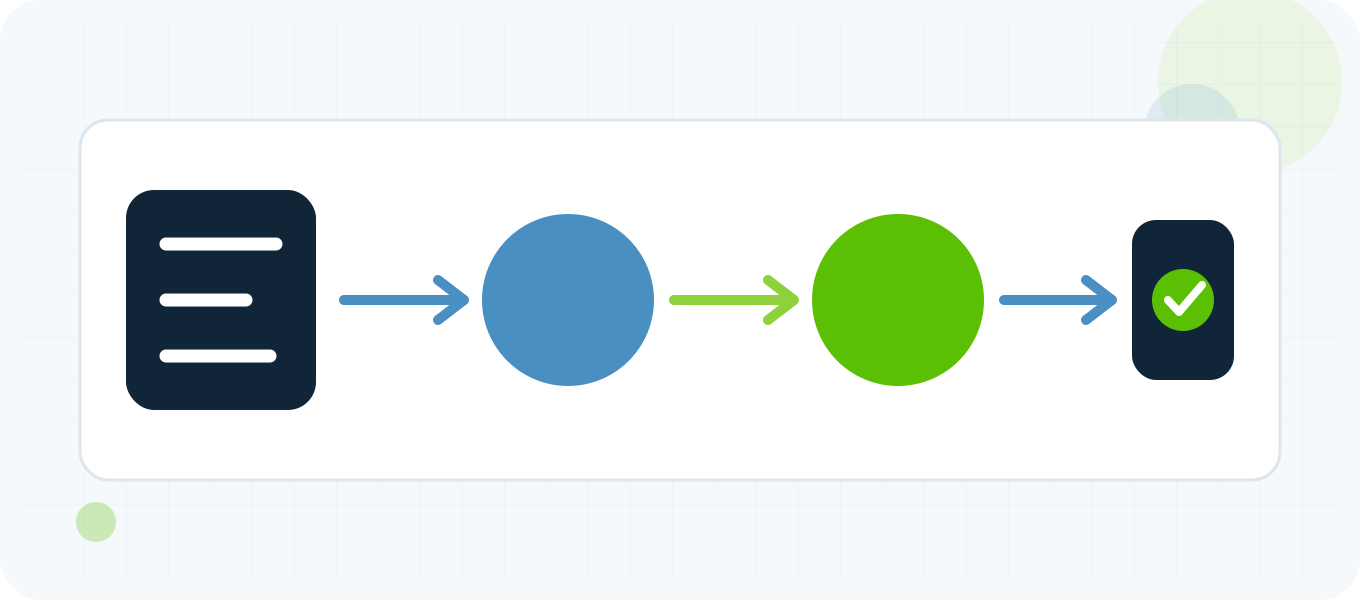
HTTP 407 usually indicates proxy authentication was required or rejected, while 401 and 403 from the destination describe a different authorization layer. A 429 indicates rate limiting and should not trigger uncontrolled retries. A 5xx response can come from the proxy, an intermediary or the target; inspect the response carefully. SOCKS clients can report negotiation or DNS errors before HTTP exists. Store the stage, status code and a sanitized reason. Do not rotate through credentials after repeated failures. Stop the batch when a control endpoint fails, when authentication errors dominate or when the target signals throttling. A safe tester detects systemic mistakes early instead of multiplying them across the list.
Measure latency at more than one point
Total response time combines DNS, TCP connection, TLS, proxy negotiation, target processing and transfer. For operational decisions, record at least connection time and total time, and keep the target constant. Warm connection pools can make later requests appear faster, while DNS caching and shared infrastructure can skew results. Run a small number of repeat samples rather than one request or an uncontrolled benchmark. Compare medians and failure rates, not only the single fastest response. Throughput tests can consume significant bandwidth and affect other customers, so obtain permission and use a controlled payload. Latency to an IP checker does not guarantee latency to the real application.
Verify the exit IP and location after the connection succeeds
The address in the source list is not always the visible exit. Gateways, chained proxies and provider routing can present another IP. Retrieve the observed exit from an approved diagnostic endpoint and compare it with the expected assignment. Then check country and, where needed, region using more than one data source. Treat city as an estimate and save the lookup time. A location mismatch should be a separate result, not a network failure. If the proxy rotates by design, record the observed set and session identifier. For sticky assignments, test whether repeated requests remain on the expected exit for the required session duration.
Use blacklist and reputation results as signals
A blacklist match can explain delivery or access problems, but lists have different purposes, evidence standards and removal policies. Do not combine every match into a universal good-or-bad score. Record the source, category, lookup time and whether the target actually rejected the proxy. A clean result does not guarantee acceptance, and a listed IP is not proof of current abuse by your user. For a production pool, define which categories are disqualifying for the authorized workflow and which require manual review. Retest after reassignment or a documented remediation interval rather than polling external services aggressively.
Scale concurrency gradually and keep an audit trail
Begin with one request, then a small batch, and increase workers only while the tester, proxy service and diagnostic endpoint remain stable. Bounded concurrency prevents local resource exhaustion and reduces the chance of triggering rate limits. Add jitter when repeated checks would otherwise synchronize. Set a maximum retry count and use backoff only for transient categories. Save run ID, proxy identifier, tester version, target, timestamps and thresholds so results can be compared. Protect the output like credential-adjacent operational data. A reproducible report is more valuable than a large CSV with no indication of how or when the numbers were collected.
Repeatable workflow
Recommended step-by-step process
- Write the protocol, target, country, latency and session acceptance criteria.
- Normalize records and validate syntax without printing or modifying credentials.
- Run one known-good control with explicit connect and read timeouts.
- Test a small sample and classify every failure by connection stage.
- Increase bounded concurrency gradually while monitoring throttling and local load.
- Verify exit IP, location and relevant reputation sources after connectivity succeeds.
- Export a timestamped report with thresholds, tester version and sanitized identifiers.
Troubleshooting common results
| Result | What to check next |
|---|---|
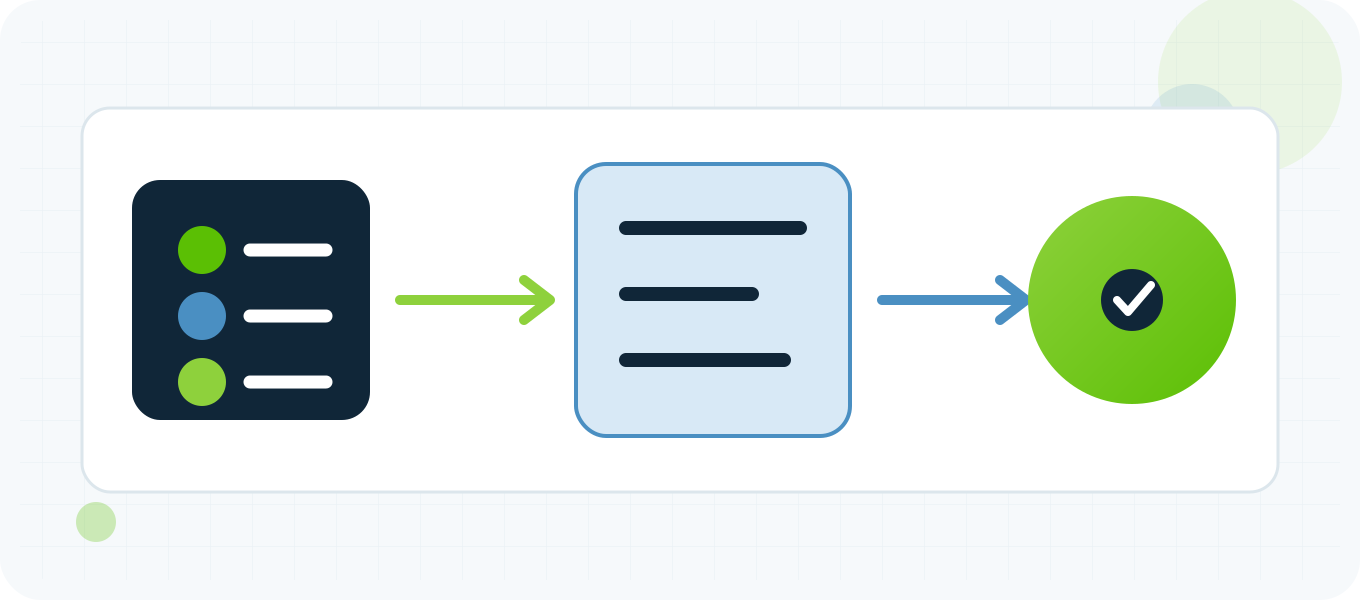
| Every proxy fails with 407 | Confirm credential order, URL encoding and client-IP authorization. Treat this as a systemic configuration problem before retrying. |
| Results alternate between fast and timed out | Reduce concurrency, separate connect and read time, and repeat against a controlled target to isolate tester or target saturation. |
| The proxy connects but shows the wrong IP | The service may use a gateway or rotating exit. Record the observed IP and compare the assignment and session documentation. |
| Many endpoints receive 429 | Stop or slow the batch. Respect target rate limits; adding workers or rotating proxies is not a valid way to ignore throttling. |
| Blacklist tools disagree | Record each source and category separately, then test whether the real authorized target is affected. Do not invent a universal reputation score. |
Related BuyProxies resources
Frequently asked questions
How to Test a Proxy List in Bulk: Speed, Authentication, Location and Blacklists FAQ
How many threads should a bulk proxy tester use?
Start with one, then a small bounded group. Increase only while the tester, proxy service and approved target remain stable. There is no safe universal thread count.
What timeout proves that a proxy is dead?
No single timeout proves that. Choose connect and read thresholds for the route and target, repeat a limited sample and classify the stage that failed.
Does HTTP 200 mean the proxy is good?
It proves that one request returned a successful HTTP status. You still need to verify the content, exit IP, location, latency, stability and target compatibility.
Should I test free public proxy lists?
Unknown public lists create security, authorization and data-handling risks. Test only endpoints you are authorized to use and never send sensitive traffic through an untrusted proxy.
Can a bulk test guarantee future performance?
No. It is a timestamped measurement. Networks, routes, reputation and target behavior change, so production pools need periodic health checks and quarantine rules.
Use evidence you can reproduce
Build the result from separate checks
A bulk test is trustworthy when every result can be traced to a definition, stage, target and timestamp. Validate syntax first, protect credentials, use explicit timeouts and bounded concurrency, and keep connectivity separate from location and reputation. That discipline produces a proxy pool you can explain, monitor and safely retire when conditions change.
Order clarity
What you receive
- What you receive
Proxy connection details for the package processed through the live order form.
- Protocols
HTTP or SOCKS5 options are shown during configuration for supported packages.
- Authentication
Set the requested proxy credentials during configuration before checkout.
- Locations
Current location availability is shown in the selector and can change with inventory.
- Support and checking
Support can help verify connection details and review replacement requests under the service policy.