
Proxy buying and operations guide
Social Media Proxies: Advantages, Disadvantages and Risks
Social media proxies are useful when a legitimate workflow needs a controlled network route, but they also add cost, security responsibility and account risk. This balanced guide explains when the benefits are real and when a proxy is unnecessary.
Quick answer
Are proxies useful for this social media workflow?
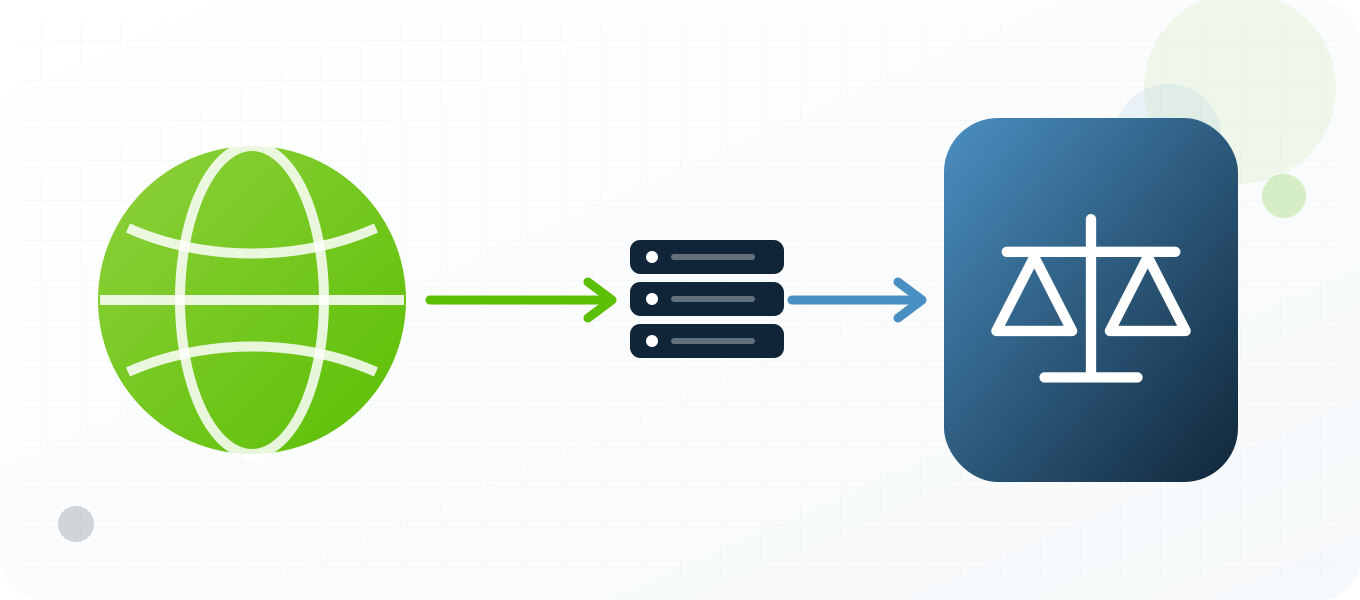
The main advantages are controlled location, repeatable testing, network separation and easier troubleshooting. The main disadvantages are added latency, credential risk, poor-IP reputation and false confidence. A proxy does not guarantee account safety and does not authorize activity that violates platform policy.
Start with the job, not the proxy
A proxy should solve a named network problem. Good examples include verifying a regional ad, reproducing a support issue, checking public content from a market, assigning a stable route to an authorized account-management profile or testing an approved API client. Buying a large pool before defining the task creates complexity without evidence. Write down the target platform, account authorization, location, session length, expected result and measurement method first. If direct access can produce the same reliable evidence, a proxy may not be needed.
The network signals a proxy can control
A proxy can change the visible exit IP, approximate network location, ASN and route characteristics. It can also give a test environment a predictable egress address. It does not control GPS, device identifiers, cookies, browser fingerprints, account history, content quality, recovery data or behavior. Social platforms combine many signals, so an IP should be treated as one input rather than a complete identity. Clear documentation of every changed variable is more valuable than a large anonymous proxy list.
Advantages for regional and advertising QA
Regional teams can verify localized creative, landing pages, redirects, language and public availability from a controlled market. A stable proxy makes screenshots and timings reproducible. It can keep campaign QA separate from employee browsing and help compare multiple countries using the same checklist. The best evidence includes proxy identifier, exit location, timestamp, URL, expected outcome and actual outcome. A proxy cannot guarantee ad delivery because campaign settings, inventory, consent and account context may also affect the result.
Advantages for authorized account administration
A dedicated route can keep an approved client or brand profile separate from public Wi-Fi and unrelated office traffic. Pairing one browser profile with one stable proxy can simplify audit and troubleshooting. This is not permission to create deceptive accounts or manipulate engagement. Every account should have a legitimate owner, strong authentication, current recovery details and a documented business purpose. Agencies should also record client authorization and remove access promptly when the engagement ends.
Disadvantages that are easy to underestimate
A proxy adds another operator, another credential set and another possible failure point. Slow routes can break uploads or live sessions. Poor reputation can cause target-specific blocks even when the proxy is technically online. Shared proxies can inherit problems caused by other users. Rotating routes can make login history look inconsistent and make support incidents difficult to reproduce. Most importantly, a proxy can create false confidence if the team ignores device, cookie, behavior and policy signals.
Privacy and security trade-offs
Traffic passes through the proxy provider, so choose a provider with clear ownership and support. Use end-to-end HTTPS and never assume the proxy can safely read account passwords or tokens. Store proxy credentials in a password manager or secret store. Do not embed them in screenshots, source code, browser bookmarks or shared spreadsheets. Use multifactor authentication and least-privilege OAuth. If a workflow needs account passwords to be shared among operators, improve the access model before expanding the proxy pool.
Platform policy still decides what is allowed
Every major platform restricts spam, deceptive identities, artificial engagement or unauthorized automation in some form. A proxy does not change those rules. Official APIs, OAuth scopes and rate-limit headers define the approved path for many automated tasks. When a platform returns 429, an access challenge or a policy warning, pause and review the method. Adding IP addresses to defeat a limit or enforcement decision increases risk and reduces the quality of the workflow.
A practical decision framework
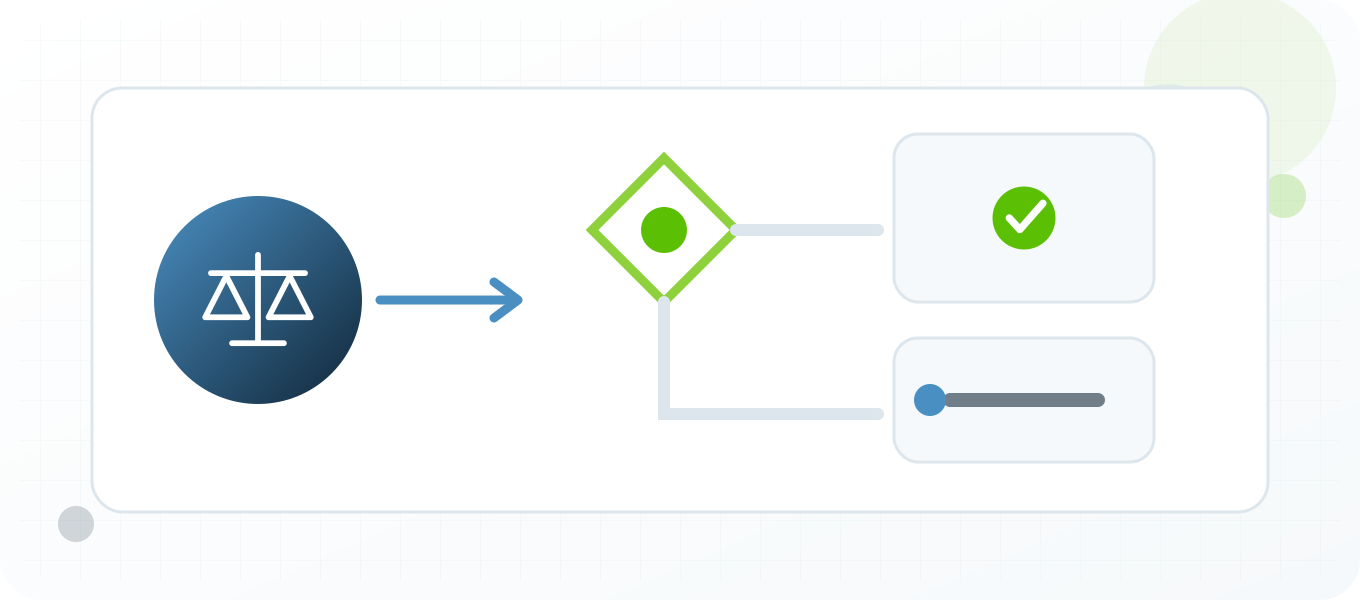
Use a proxy when location or network separation is material to the result, the account and task are authorized, the platform permits the workflow, and the team can protect credentials and measure success. Avoid a proxy when the purpose is vague, direct access is sufficient, the app requires an official integration, or the task depends on misleading users. Start with one private proxy and one test. Scale only after the process has stable measurements, clear failure handling and an owner.
Cost, ownership and ongoing maintenance
The purchase price is only one part of the cost. A useful deployment also needs credential storage, assignment records, health checks, location verification, incident handling and someone responsible for retiring routes. Large pools create more inventory to monitor and more ways for reports to lose context. Begin with the smallest number of dedicated routes that covers the approved profiles or markets. Review success rate, latency and support time after a trial period. If the proxy does not improve evidence quality or reduce operational friction, remove it. A smaller controlled set usually produces better social-media QA than a large list with unknown history and no owner.
Advantages
- Controlled exit country for regional QA and public-content checks.
- Repeatable network route for screenshots, timings and support evidence.
- Separation between approved client profiles and ordinary office browsing.
- Predictable egress for authorized developer or advertising systems.
- Independent testing of location, reputation and connectivity.
- Easier retirement of a known-bad route without changing the whole network.
Disadvantages
- Additional latency, downtime and troubleshooting complexity.
- Proxy credentials and provider trust become new security responsibilities.
- Poor IP reputation can cause blocks unrelated to account quality.
- Rotation can disrupt stateful sessions and account history.
- A proxy does not hide device, cookie, behavior or content signals.
- Costs grow quickly when the workflow has no clear success metric.
Repeatable process
Recommended workflow
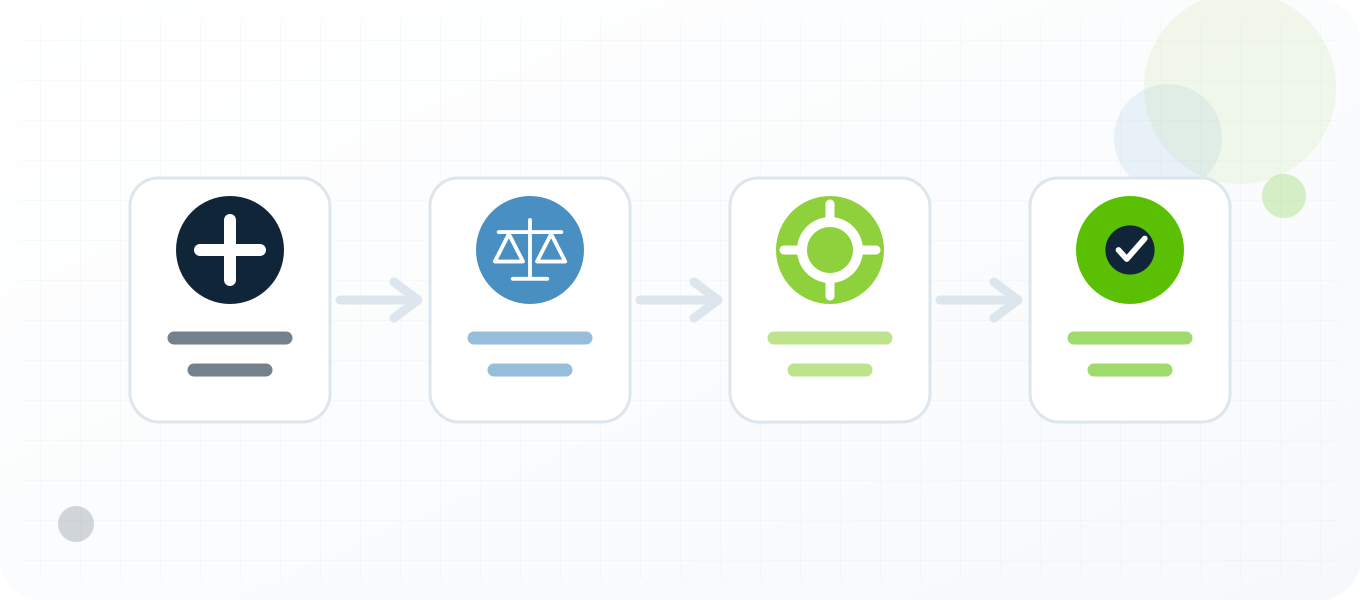
- Document the legitimate task, platform, account owner and expected result.
- Decide whether the job needs a stable session or a stateless public check.
- Choose the smallest private proxy set that covers the required locations.
- Test connectivity, location, reputation and DNS behavior before login.
- Run one controlled test and keep all non-network variables stable.
- Record results without exposing credentials, tokens or private content.
- Review platform policy and stop on challenges or repeated limits.
- Scale only when the test has a measured benefit and repeatable failure handling.
Troubleshooting
| Symptom | What to check |
|---|---|
| Proxy works but platform fails | Test the target separately, then review protocol, reputation, account security and platform policy signals. |
| Location looks wrong | Compare multiple IP databases, DNS, language, GPS and cached account settings. |
| Session keeps disconnecting | Stop rotation, use one stable route and measure latency and timeout behavior. |
| Results cannot be reproduced | Record the proxy identifier, timestamp, account context, browser version and exact test steps. |
| Team keeps sharing credentials | Move secrets to a managed vault and assign individual access before continuing. |
Related BuyProxies guides
Official references
Frequently asked questions
Social Media Proxies: Advantages, Disadvantages and Risks FAQ
What is the biggest advantage of a social media proxy?
It gives a legitimate test or account workflow a controlled network route and location that can be measured and reproduced.
What is the biggest disadvantage?
It adds another trust and failure layer while leaving many account, device and behavior signals unchanged.
Do proxies prevent social media bans?
No. Platform enforcement can depend on rules, content, behavior, account history, devices and many other signals.
Are dedicated proxies better than shared proxies?
Dedicated proxies are generally easier to secure and troubleshoot because reputation and performance are not shared with unknown users.
When should I avoid rotating proxies?
Avoid rotation during login, recovery, profile editing, uploads, live streams and other stateful sessions.
How many proxies should I buy first?
Start with one per required stable profile or test market, validate the workflow and expand from measured need.
Start with a controlled test
Choose a proxy setup you can explain
A useful social-media proxy program is small, documented and measurable. Begin with one authorized use case, verify one private proxy and capture evidence another person can reproduce. Expand only when the advantages outweigh the operational and policy costs.
Order clarity
What you receive
- What you receive
Proxy connection details for the package processed through the live order form.
- Protocols
HTTP or SOCKS5 options are shown during configuration for supported packages.
- Authentication
Set the requested proxy credentials during configuration before checkout.
- Locations
Current location availability is shown in the selector and can change with inventory.
- Support and checking
Support can help verify connection details and review replacement requests under the service policy.