
Social proxy comparison
Static vs Rotating Proxies for Social Media Workflows
Static and rotating proxies solve different problems. Social account sessions usually need consistency, while carefully scoped public checks may benefit from controlled rotation. The correct choice depends on state, authorization and measurement—not on how many IPs are available.
Quick answer
Are proxies useful for this social media workflow?
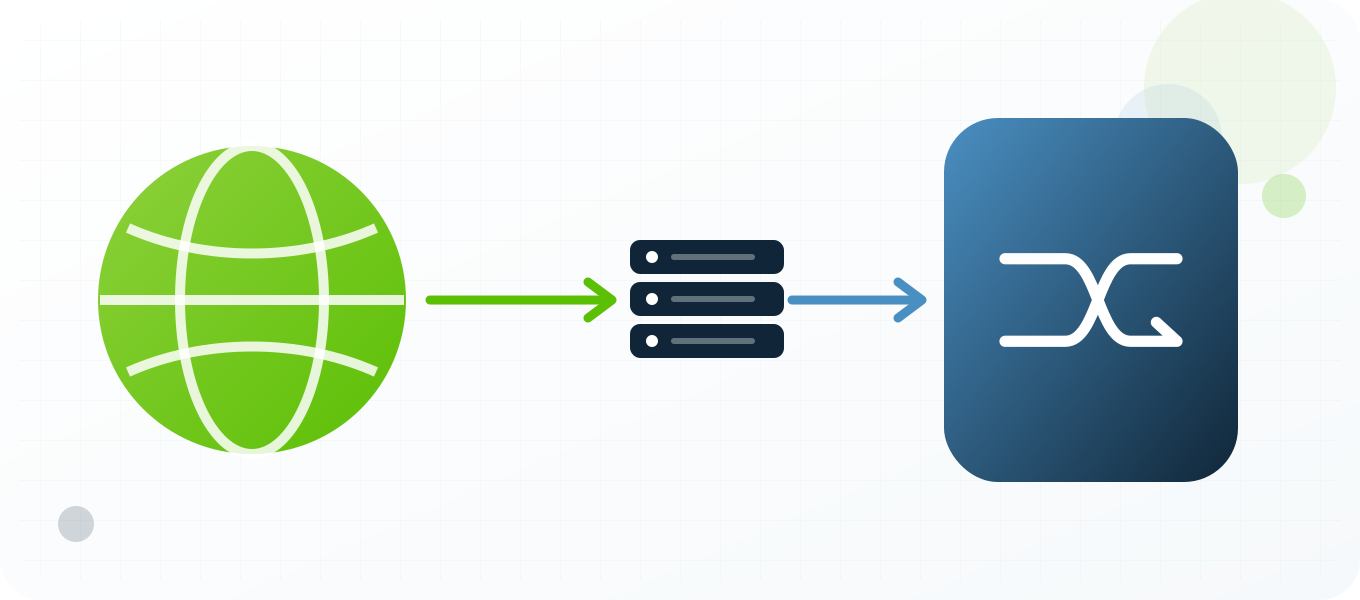
Use a static dedicated proxy for login sessions, browser profiles, uploads, live work and authorized account administration. Consider controlled rotation only for stateless public measurements that the platform permits. Rotation does not make prohibited automation safe and should never be used to defeat rate limits or enforcement.
Static and rotating mean different session behavior
A static proxy keeps the same exit IP until the assignment is changed. A rotating service selects a new exit according to a request, time or session rule. Some rotating products also support sticky sessions for a defined period. The label alone is not enough: ask how long an IP remains assigned, what event changes it, whether credentials select a session and how failures are handled. For social workflows, the rotation rule can be more important than the size of the pool.
Why stateful social sessions prefer stability
Login, recovery, profile editing, publishing, uploads, live streams and messaging all create state. Cookies, tokens and application connections expect continuity. Changing IPs in the middle of these flows can trigger verification, interrupt an upload or make an error difficult to reproduce. A dedicated static route is usually the clearest baseline. Keep the same browser profile, language, timezone and device context, and document intentional changes instead of allowing silent rotation.
Where controlled rotation can be useful
Rotation can be useful for stateless, public and authorized checks such as measuring whether a public landing page is reachable from several markets, comparing localized creative or monitoring public availability. Each observation should stand alone, and the test should respect the platform rules, request limits, privacy obligations and robots guidance. Use a defined market list, a modest request rate and a unique evidence record for every route. Do not rotate to conceal repeated actions or avoid a limit.
Dedicated, semi-dedicated and pool reputation
A dedicated proxy has one customer, making performance and reputation easier to attribute. A semi-dedicated proxy costs less but can be affected by another user. A rotating pool provides diversity but also variation in latency, ASN, location accuracy and history. Social account work benefits from predictability, while public QA may accept more variation if it is measured. Always test the exact destination because a generic IP checker cannot show how a platform treats the route.
Sticky sessions are a compromise, not a guarantee
A sticky session asks a rotating service to preserve an exit for a period or session key. This can help a multi-request public workflow, but the IP may still disappear because of health checks or provider changes. It is not equivalent to a long-term dedicated assignment. Record the session duration, renewal behavior and failure policy. For sensitive accounts, a dedicated static proxy remains easier to explain than a sticky route that can change unexpectedly.
Authentication and browser profile design
Choose username and password authentication or IP allowlisting based on the environment. Store credentials outside the browser profile where possible. Pair one authorized social profile with one stable route and do not reuse cookies across unrelated accounts. Test DNS and WebRTC behavior so browser traffic does not split across routes. A clean network design reduces false alarms, but it does not replace multifactor authentication, recovery controls or platform authorization.
Rate limits belong to the application and account too
Many services apply limits by application token, account, endpoint or service host in addition to IP. A 429 response is an instruction to slow down, not a request for another proxy. Read reset headers and implement backoff. Distributing requests across a pool to defeat a platform limit can violate policy and make the client harder to operate. A good integration can explain every retry and stop automatically when authorization or policy errors repeat.
Selection matrix for real workflows
Choose static dedicated for brand accounts, customer support, uploads, live sessions and repeatable troubleshooting. Consider semi-dedicated for lower-risk public browsing where cost matters and reputation is tested. Consider controlled rotating proxies for permitted public measurements across markets when no account state is carried between requests. Use direct access when location is irrelevant or when an official platform integration already provides the required data. The simplest method that produces reliable evidence is usually the best method.
Scale assignments without losing accountability
When the first test succeeds, scale by documented need rather than by the largest available pool. Maintain an assignment table with proxy identifier, owner, platform, purpose, market, start date and last health check. Keep account credentials out of that table. For static routes, review reputation and latency on a schedule. For rotating services, preserve the session key and exit IP with each evidence record. Remove unused assignments promptly. This operating discipline matters because an unexplained route change can invalidate a regional comparison, interrupt a session or leave a former contractor with access. Capacity should follow measured concurrency and market coverage, not speculative future use. Review the allocation monthly, compare actual usage with the original business purpose, and close routes that no longer have an accountable owner. A clear retirement process is as important as the initial proxy purchase.
Advantages
- Static proxies keep logins, cookies and long sessions on one predictable route.
- Static dedicated IPs make reputation and incident history easier to attribute.
- Rotating pools can cover multiple regions for stateless public QA.
- Sticky sessions can preserve a short multi-request public workflow.
- A documented allocation model helps teams reproduce results.
Disadvantages
- Static IPs provide less geographic breadth without multiple assignments.
- Rotating IPs can interrupt account state, uploads and live connections.
- Pool quality can vary by ASN, latency, location accuracy and reputation.
- Sticky sessions can change unexpectedly and are not long-term assignments.
- Rotation can create false confidence about rate limits and platform enforcement.
Repeatable process
Recommended workflow
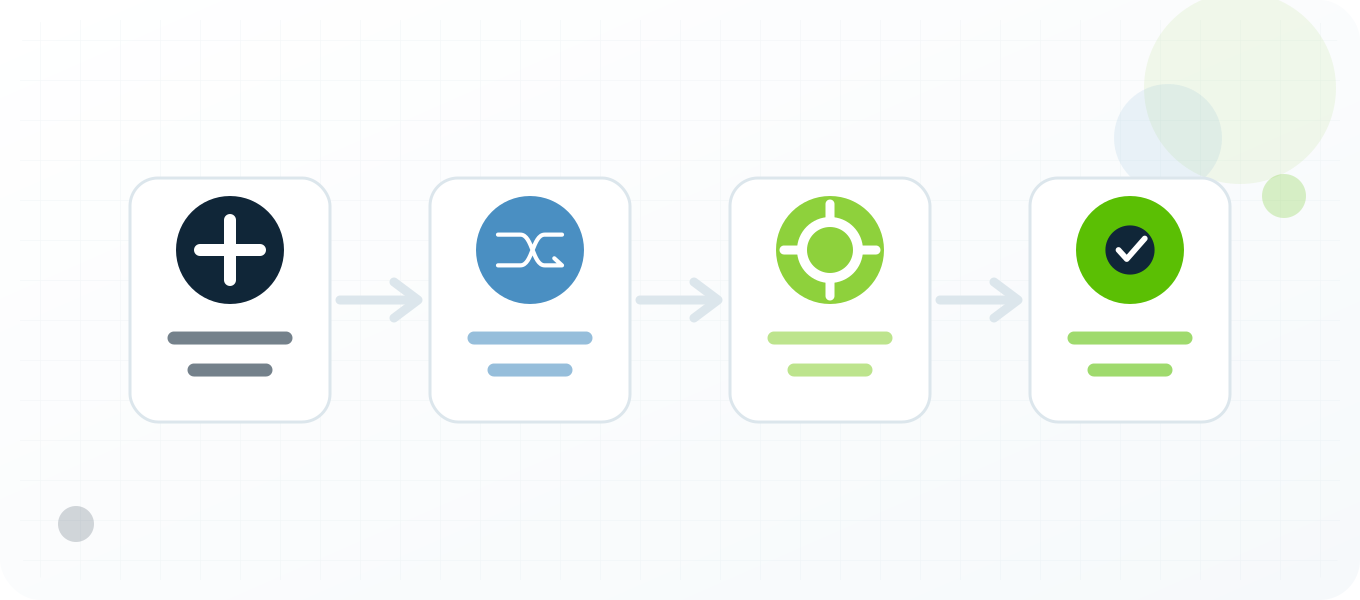
- Classify the task as stateful account work or stateless public measurement.
- Confirm the activity is authorized and allowed by the current platform rules.
- For stateful work, assign one dedicated proxy to one browser profile.
- For public QA, define the market list, request rate and rotation trigger.
- Test every route for location, reputation, latency and target access.
- Record session ID or proxy identifier with each observation.
- Respect account, token, endpoint and IP rate limits together.
- Retire routes based on measured failure, not on one unexplained response.
Troubleshooting
| Symptom | What to check |
|---|---|
| Login challenges increase | Stop rotation and return the authorized account to one documented route and official recovery flow. |
| Results vary between requests | Record the exit IP, ASN, location and session key so pool variation can be separated from platform variation. |
| Sticky session changes early | Review provider health and session guarantees; use a dedicated proxy when continuity is mandatory. |
| Requests receive 429 | Follow platform reset and backoff guidance. Do not treat rotation as a rate-limit solution. |
| Browser shows mixed locations | Check DNS, WebRTC, extensions and system proxy settings for split traffic. |
Related BuyProxies guides
Frequently asked questions
Static vs Rotating Proxies for Social Media Workflows FAQ
Are static proxies better for social media accounts?
Usually yes for stateful authorized sessions because the account keeps one predictable route.
When are rotating proxies appropriate?
They fit permitted stateless public measurements where each request is independent and rotation is documented.
Is a sticky proxy the same as a dedicated proxy?
No. A sticky session preserves a pool IP temporarily, while a dedicated assignment is designed for longer, exclusive use.
Can rotating proxies solve rate limits?
No. Limits can apply by account, token, endpoint and service, and platform policy still requires backoff.
How many static proxies are needed?
Start with one per authorized stable profile or required market, then expand only from measured concurrency and coverage needs.
Should the proxy country match the account?
For account continuity, keep location intentional and consistent with the authorized business context and platform expectations.
Start with a controlled test
Choose a proxy setup you can explain
Static proxies are the safer default for social sessions; controlled rotation is a specialized tool for permitted public measurements. Choose the assignment model that preserves state, respects platform rules and produces evidence another person can reproduce.
Order clarity
What you receive
- What you receive
Proxy connection details for the package processed through the live order form.
- Protocols
HTTP or SOCKS5 options are shown during configuration for supported packages.
- Authentication
Set the requested proxy credentials during configuration before checkout.
- Locations
Current location availability is shown in the selector and can change with inventory.
- Support and checking
Support can help verify connection details and review replacement requests under the service policy.