
Meta social testing guide
Threads Proxies: Regional Testing, Benefits and Limitations
Threads proxies can help a team verify regional web behavior, linked destinations and authorized publishing infrastructure. They do not separate Threads from the wider Meta and Instagram account context or authorize fake engagement.
Quick answer
Are proxies useful for this social media workflow?
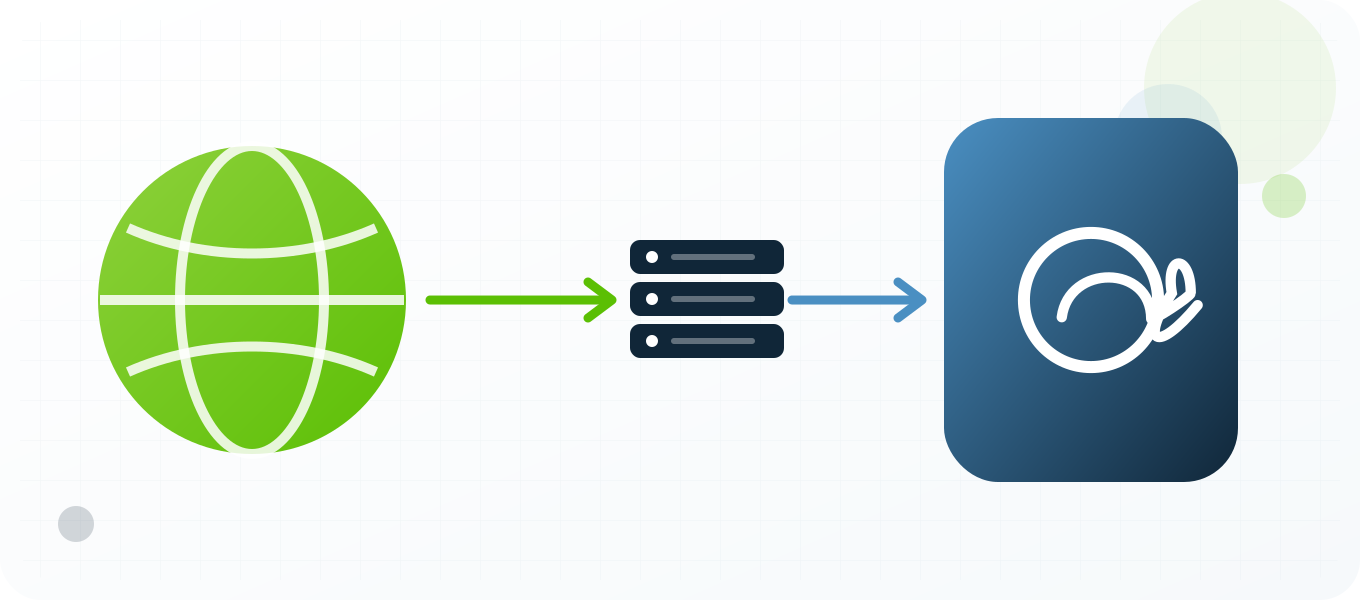
Use a stable private proxy when you need a controlled Threads network route for checking regional conversations, links or an approved professional publishing workflow. Verify location and reputation first, keep one IP for stateful sessions, document the result and follow Threads rules. A proxy changes the visible network path; it does not guarantee account safety, approval, reach or access.
What a Threads proxy changes
A proxy changes the network route used to reach Threads. The service normally sees the proxy exit IP, its approximate location, its network owner and the timing characteristics of that route instead of the direct connection. That can be useful when checking regional conversations, links or an approved professional publishing workflow. It does not replace the account, device, cookies, browser profile or application credentials. It also does not make prohibited behavior acceptable. Threads is connected to the Meta ecosystem, so a different IP does not create an independent account context or erase signals shared through authorized services. Treat the proxy as one controlled network variable inside a documented test, not as a complete identity layer.
What a proxy does not hide
Social platforms evaluate more than an IP address. They can consider account history, authentication events, device information, cookies, language, timezone, application version, content patterns, interaction patterns and recovery signals. A clean IP cannot repair a compromised account or make a poor workflow trustworthy. If the visible country changes while the device, language and normal account history point somewhere else, the result can be harder to interpret. Keep the non-network context stable, record intentional changes and use the platform's official security and recovery processes when an account is challenged.
Legitimate reasons to use proxies with Threads
The strongest use cases are measurable and authorized. Teams can review public profiles, posts, linked pages, web access and approved Threads API operations from a selected market, reproduce a customer connection problem, verify whether public content or a landing page is localized correctly, separate a staging test from ordinary office traffic and monitor service quality from more than one region. Agencies may also need controlled network separation for accounts they are contractually authorized to manage. Public-interest researchers can use a proxy for repeatable access to public pages, subject to law, robots rules, rate limits and Threads policy. None of these tasks requires fake engagement or deceptive account creation.
Choose a proxy type around the session
A static dedicated proxy is the clearest starting point for a login, support session or browser profile because the route remains stable while the work is in progress. A semi-dedicated proxy can be economical for lower-risk public checks, but its reputation may be influenced by other users. Rotation is better reserved for stateless, public and explicitly permitted measurements where each request can stand on its own. Do not rotate in the middle of authentication, profile editing, checkout, recovery or a long live session. The right question is not which proxy rotates fastest; it is which assignment makes the test reproducible and consistent with platform rules.
Location, latency and reputation
Choose a location that matches the market being tested and is close enough to keep latency practical. Confirm the exit country with an independent IP checker before opening Threads. Then measure connection time, page or API response time and the result of the exact test. Reputation matters because a working IP can still have a noisy history. A failed request on one destination does not prove the proxy is offline, and a successful IP check does not prove that every Threads feature will work. Test both the network and the target surface, and keep those results separate.
Account and credential safety
Keep proxy credentials in a password manager or server-side secret store, never in screenshots, shared documents, browser bookmarks or source control. Give each authorized operator only the access needed for the task. Use multifactor authentication on the social account and keep recovery details current. When a third-party application is required, prefer OAuth or another official authorization flow over sharing the account password. For publishing and analytics, prefer the official Threads API and Meta authorization process. Keep access tokens out of client-side code and request only the permissions required. A proxy should not become an excuse to weaken account security; it should make the network path easier to control and audit.
Rules, automation and responsible limits
Threads use is governed by Meta terms and standards that prohibit spam, fake engagement, deceptive identities and coordinated inauthentic activity. Read the current rules before building a workflow because platform policies and API limits change. Avoid unsolicited messaging, artificial engagement, copied content at scale, deceptive identities, unauthorized collection and attempts to circumvent enforcement. If automation is allowed, use the official API, request the minimum scopes, respect rate-limit headers and provide meaningful backoff. A proxy does not grant permission to automate a website or exceed a service limit. Stop the test when the platform returns a policy warning, access challenge or repeated rate-limit response, then review the method rather than adding more IP addresses.
How to measure a useful result
Define success before the test. A regional QA check might require the expected language, market-specific creative, correct redirect, stable page load and a screenshot with timestamp and exit location. A support investigation might require a reproducible error, browser version, proxy identifier, status code and elapsed time. An authorized API integration should log request IDs, rate-limit headers and retry decisions without logging tokens or personal data. These records make the result useful to another person and prevent guesswork. They also show whether a proxy improved the workflow or merely changed the visible IP.
When not to use a proxy
Do not add a proxy when direct access already provides the evidence you need, when the platform requires a specific approved integration, or when the proposed activity would violate a contract, law or platform rule. Do not use a proxy to conceal harassment, impersonation, spam, fraudulent promotion or unauthorized account access. If the task depends on creating misleading identities or manipulating metrics, the problem is the task, not the proxy configuration. For sensitive accounts, a familiar direct connection with strong authentication can be safer than introducing an unnecessary new route.
Threads tests inherit Meta account context
A Threads session can be influenced by the connected Instagram identity, Meta security history, language, follows and prior interactions. That makes a pure before-and-after IP comparison insufficient for personalized feeds. Use public profiles, named posts and linked destinations when the goal is regional QA. If an authenticated view is required, state which account class and permissions were used. Do not compare two accounts and attribute every difference to location, because their histories can produce different recommendations even on the same network.
Publishing integrations need token and review discipline
An approved Threads integration should keep its server route stable, protect long-lived credentials and log the object identifier returned for each publishing operation. Test with a designated professional account and minimal content before a campaign. A publishing failure should be classified as token, permission, media, API, rate-limit or network related. Moving the same token through several proxies makes that classification harder. Keep the route constant until the error is understood, then document any infrastructure change as a new test.
Advantages
- Check public Threads pages and linked destinations from a target market.
- Verify an approved publishing integration from a predictable server route.
- Separate campaign QA from normal employee browsing without changing accounts.
- Measure web availability and latency across countries.
- Create reproducible evidence for regional brand or support reviews.
Disadvantages
- Threads and Instagram account signals remain connected beyond the IP address.
- A route change can trigger security review when it conflicts with normal history.
- Aggressive rotation is unsuitable for publishing or account settings.
- A proxy cannot guarantee that content is recommended in a market.
- Unofficial automation can violate Meta rules despite successful network access.
Repeatable process
Recommended workflow
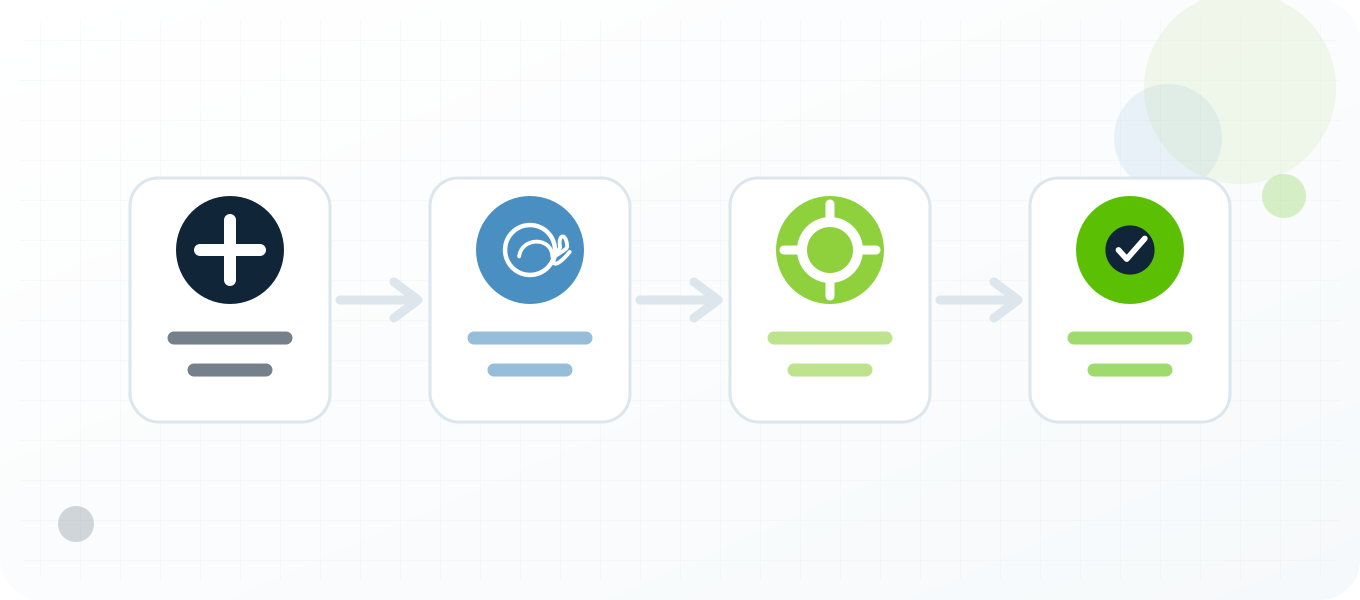
- Define whether the task is public-page QA, link verification or approved API publishing.
- Use one private proxy in the selected market and verify its exit country.
- Keep the authorized Meta identity, browser profile and language settings documented.
- For automation, create an official Threads application and use scoped tokens.
- Run a small test post or read operation in a controlled environment.
- Record response IDs, timestamps, rate limits and the regional result.
- Revoke test tokens and remove temporary access after the review.
Troubleshooting
| Symptom | What to check |
|---|---|
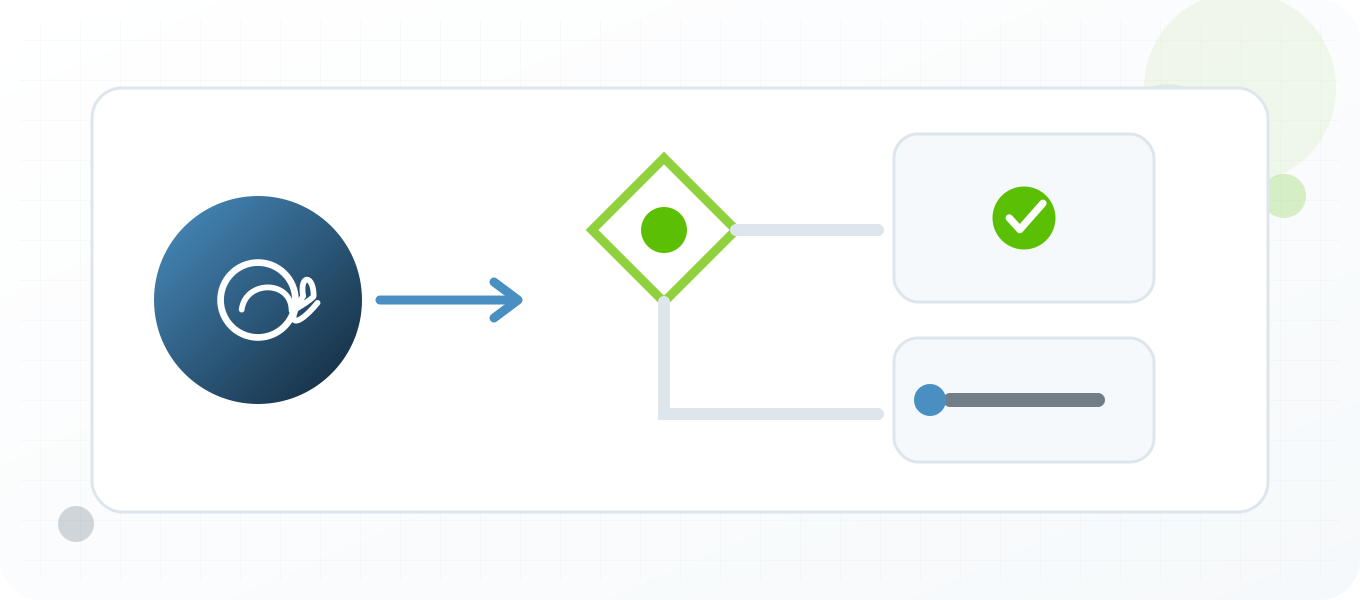
| Threads login redirects to Instagram | Treat the linked identity flow as expected and verify the account authorization rather than changing proxies. |
| API permission is denied | Review app mode, account eligibility, scopes and Meta review status. Network rotation does not grant permissions. |
| Regional content does not change | Recommendations can depend on language, follows, history and product logic beyond the IP. |
| Web page works but publishing fails | Separate browser access from API token, scope and endpoint errors. |
Related BuyProxies guides
Official references
Frequently asked questions
Threads Proxies: Regional Testing, Benefits and Limitations FAQ
Does a Threads proxy separate the account from Instagram?
No. Threads account and security context can remain connected to Meta and Instagram systems beyond the network route.
Can a proxy make a post appear in another country?
It can support regional testing, but recommendations depend on many product and account signals. There is no placement guarantee.
Should Threads publishing use rotating proxies?
A stable route is easier for an authorized publishing integration. Rotation is rarely useful for a stateful account operation.
Can I use a browser script instead of the Threads API?
Use the official API when the workflow requires programmatic publishing or data access and follow its permissions and limits.
What should a Threads regional QA report include?
Include exit country, language, account context, URL, timestamp, screenshot and expected versus actual behavior.
Start with a controlled test
Choose a proxy setup you can explain
Start with one Threads test, one documented purpose and one verified private proxy. Keep the connected Instagram identity, device, cookies, account history and Meta security context consistent, capture the expected and actual result, and expand only after the workflow is stable. BuyProxies provides dedicated HTTP and SOCKS5 options plus testing guides, but the operator remains responsible for platform compliance, account authorization and the quality of every action.
Order clarity
What you receive
- What you receive
Proxy connection details for the package processed through the live order form.
- Protocols
HTTP or SOCKS5 options are shown during configuration for supported packages.
- Authentication
Set the requested proxy credentials during configuration before checkout.
- Locations
Current location availability is shown in the selector and can change with inventory.
- Support and checking
Support can help verify connection details and review replacement requests under the service policy.