France Proxies: French IPs for SEO, Scraping, and Local Access

France proxies give your browser, scraper, or business software a French IP address. That makes them useful for checking Google France results, testing localized landing pages, verifying ads, collecting public data, and managing workflows that need a stable France-based network identity.

The best France proxy setup depends on the job. SEO checks need accurate location signals. Scraping needs speed, uptime, and clean error handling. Account workflows need consistency and fewer sudden IP changes. This guide explains how to choose the right France proxies and how to use them without wasting time on slow, risky, or mismatched IPs.

France proxies: What This Guide Helps You Decide

If you are searching for France proxies, you probably need more than a definition. You need to know when this proxy setup makes sense, what type to choose, how to test it, and what problems to avoid before you use it for SEO, scraping, browsing, accounts, or automation.

This guide also answers the close follow-up questions people usually have around France proxy, French IP proxy, FR proxies, and local France proxy, so the article is useful even when the exact search phrase is slightly different.

Last reviewed: June 2026. The guidance focuses on practical proxy selection, setup testing, measurement, and responsible use rather than search-engine tricks.

Short Answer

France proxies help you test search results, ads, prices, pages, scraping jobs, and account workflows from a local IP. Use them when location changes what a website shows, then verify country, speed, protocol, and repeatability before scaling.

Fast Facts

Decision point Best-practice answer
Best fit France proxies are best for local SEO checks, ad QA, market research, localized scraping, and region-specific testing.
First test Confirm the visible IP location, language behavior, speed, and target-site access before using the proxy in reports or campaigns.
Avoid when Do not use a country proxy to hide spam, fake activity, or broken scraping logic.
Measure success Track location accuracy, localized output, response time, block rate, and repeatability.

Topic Map

Entity How it fits this guide
Main topic France proxies
Proxy role Provides a local IP signal for country-specific testing, research, scraping, and QA.
Related concepts France proxy, French IP proxy, FR proxies, and local France proxy
Search intent The reader wants to know when local IPs help and how to test regional accuracy.
Main caution Do not treat a proxy as a guarantee; test the real workflow and respect website rules.

Related Terms in Plain English

  • France proxy: A location signal used for regional testing, local search checks, ads, content, pricing, or market research.
  • French IP proxy: A location signal used for regional testing, local search checks, ads, content, pricing, or market research.
  • FR proxies: A related proxy concept that helps clarify the right setup, use case, test process, or risk level.
  • local France proxy: A location signal used for regional testing, local search checks, ads, content, pricing, or market research.

Questions Answered in This Article

Reader question What this article answers
When do I need this location? How local IP location affects regional access, search results, ads, scraping, and testing accuracy.
What should I know before choosing FR proxies? Which proxy type, location, protocol, and stability level fit the practical use case.
When do I need this location? How local IP location affects regional access, search results, ads, scraping, and testing accuracy.

How to Use This Information

  • Match the proxy to the job: browser access, scraping, SEO checks, account workflows, and developer tools all need slightly different setups.
  • Check location and protocol first: confirm the visible IP, HTTP or SOCKS support, authentication, and speed before scaling.
  • Measure results: track success rate, response time, blocks, challenges, and repeatability instead of judging the proxy from one test.
  • Avoid low-quality shortcuts: free or unknown proxies can create privacy, reliability, and account-trust problems.

Useful Internal and External Links

Use these links to check the proxy setup, compare related guides, and confirm technical or policy details from official sources.

Related BuyProxies resources

Official references

Quick Answer

Use France proxies when you need your traffic to appear from a French IP address for SEO checks, ad verification, localized QA, public data collection, or account workflows. For most business tasks, start with private datacenter France proxies because they are fast, predictable, and easier to test. For sensitive account work, keep the proxy stable and avoid sudden country changes.

Who Should Use France Proxies?

France proxies are useful for SEO teams, agencies, ecommerce operators, developers, QA testers, data teams, and social media managers. They help when the result changes based on location, language, IP reputation, or repeated requests from the same network.

They are especially valuable when you need repeatable French market testing. Instead of asking someone in France to check every page, you can route your own tools through a French IP and verify what a local visitor is likely to see.

What Are France Proxies?

France proxies are proxy servers that route your internet traffic through IP addresses associated with France. When a website checks your network location, it sees the French proxy IP instead of your original IP address. This is useful when a website, search engine, ad platform, or business tool shows different results to French visitors.

A proxy does not magically make every workflow safe or anonymous. Cookies, account history, browser fingerprints, request patterns, and platform rules still matter. A good proxy gives you a cleaner network layer; you still need careful setup and responsible usage.

Best Uses for France Proxies

  • Local SEO tracking: check French search results, keyword rankings, and localized landing pages from a France-based IP.
  • Ad verification: confirm whether ads, redirects, prices, and offers appear correctly to users in France.
  • Market research: compare French ecommerce pages, public listings, prices, and content availability.
  • Web scraping: collect public data from French-facing websites with better location consistency and fewer repeated requests from one IP.
  • Account workflows: manage tools or accounts that need a stable French network location.
  • Website QA: test forms, checkout flows, language redirects, shipping pages, and geo-specific content.

Real-World France Proxy Examples

  • SEO agency: check whether a French landing page ranks differently from Paris than it does from a US office network.
  • Ecommerce team: verify French pricing, shipping availability, checkout language, and promotions before a campaign goes live.
  • Data team: collect public product or travel data while keeping request volume away from one single office IP.
  • Ad buyer: confirm that a campaign, tracking link, and final landing page show the correct French offer.
  • QA tester: test redirects, cookie banners, forms, and localized content as a France-based visitor.

Which Type of France Proxy Should You Choose?

The right proxy type depends on speed, trust, budget, and the sensitivity of the task. For many SEO, QA, scraping, and testing workflows, private datacenter France proxies are the best starting point because they are fast, stable, and cost-effective.

Proxy type Best for Tradeoff
Private datacenter France proxies SEO checks, scraping, QA, ad verification, fast repeatable tasks Some sensitive platforms may score datacenter IPs more strictly
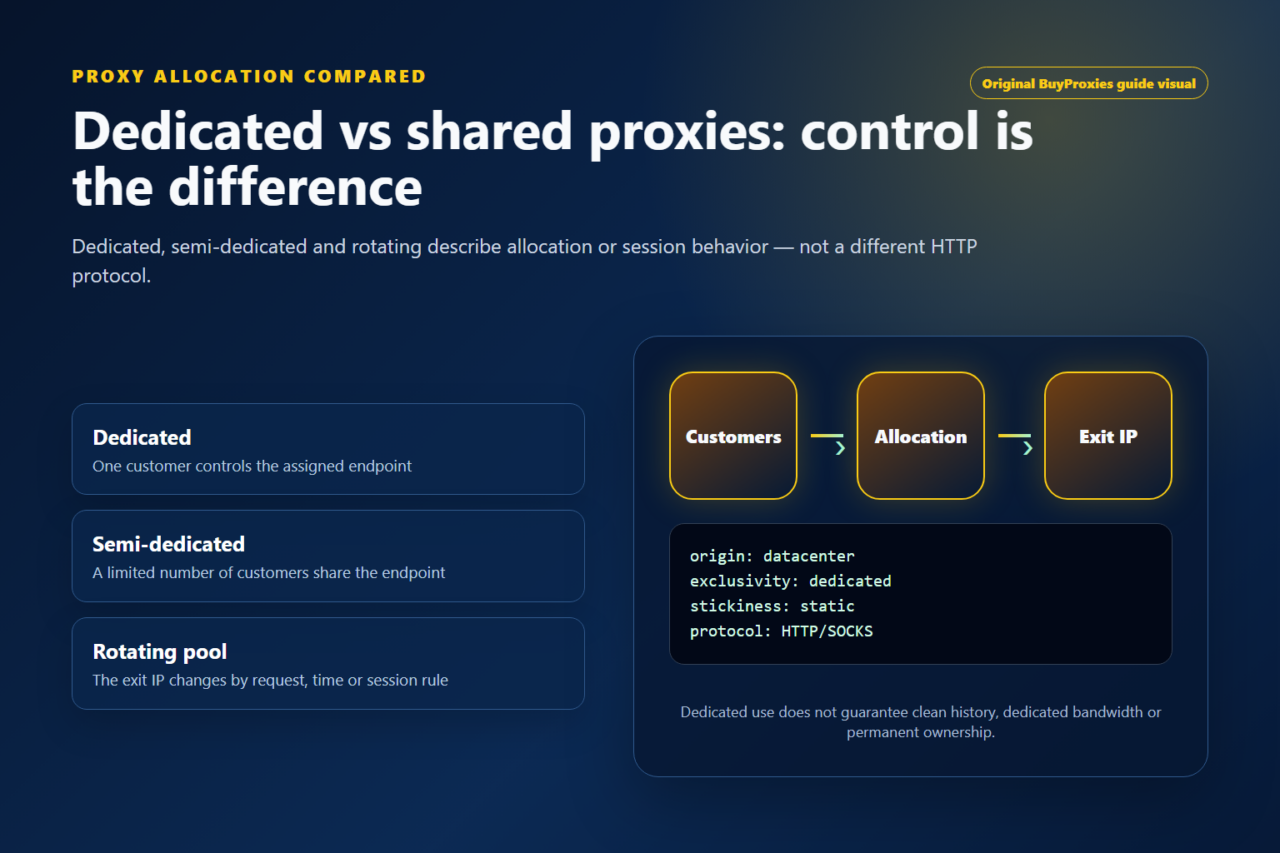
Shared France proxies Lower-cost, lighter browsing or testing tasks Performance and IP reputation can be affected by other users
Residential France proxies Higher-trust browsing and sensitive workflows Usually more expensive and sometimes slower
SOCKS France proxies Apps that specifically require SOCKS or broader protocol support Not always needed for normal browser or web scraping traffic

If you are not sure where to start, compare HTTP vs SOCKS proxies and shared vs private proxies before choosing a plan.

Practical France Proxy Scenario

Imagine an ecommerce team is preparing a French campaign. The team needs to check the landing page, product price, shipping text, cookie banner, checkout language, and ad redirect from a France-based visitor view. A France proxy makes that test repeatable. The team can verify the IP location, open the same path through the same browser profile, record the result, and repeat the check later if the campaign changes.

This is where a France proxy is more useful than a vague privacy tool. It gives the workflow a controlled French network signal. If the page still looks wrong, the team can investigate language settings, cookies, tracking links, account history, or website rules instead of guessing whether the issue is location.

Practical France Proxy Decision Check

Question Best next step Proof to look for
Do you need French search or ad results? Use a France-specific private proxy and keep the same browser, language, and device settings for each check. Google results, ads, redirects, prices, or page language match the French market.
Are you collecting public French market data? Start with a small sample, low concurrency, timeouts, and clear error logging. You can separate proxy timeouts from target-site blocks, redirects, and empty pages.
Will accounts or dashboards be involved? Keep one stable France proxy with a matching browser profile instead of rotating constantly. Login challenges do not increase after the proxy is assigned.
Are you testing client work? Verify the proxy location before sending reports or campaign screenshots. The visible IP resolves to France and the final page matches what a French visitor should see.

What Good France Proxy Results Look Like

  • The visible IP resolves to France before the report, scraper, browser session, or ad test starts.
  • French search results, ads, prices, language, or redirects appear consistently across repeated checks.
  • Pages load fast enough that slow proxy response is not confused with a broken website.
  • Errors are logged by type, so proxy connection issues are not mixed with captchas, redirects, or target-site blocks.
  • Account or dashboard sessions stay on a stable France proxy when consistency matters.

France Proxy Red Flags

  • The IP does not resolve to France, or the provider cannot replace wrong-location IPs.
  • The same report mixes France, Germany, USA, and other locations without clear labels.
  • Free public proxies are used for client reports, logins, paid campaigns, or private business tools.
  • Random rotation is used for accounts that need a stable French session history.
  • Every failure is blamed on the proxy before checking cookies, language settings, request rate, browser profile, or website rules.

What to Check Before You Buy

Check Why it matters
French IP location The proxy should resolve to France before you use it for reports, ads, scraping, or QA.
Protocol support Your software must support the proxy type, such as HTTP, HTTPS, or SOCKS.
Authentication Username/password or IP allowlisting should match how your tools connect.
Speed Slow proxies create false failures in scraping, browser testing, and SEO checks.
Replacement policy Good support matters when an IP is slow, blocked, or mapped to the wrong location.

How to Set Up and Test a France Proxy

  1. Copy your proxy IP, port, username, and password.
  2. Add the proxy details to your browser, scraper, SEO tool, or automation software.
  3. Choose the correct protocol: HTTP, HTTPS, or SOCKS.
  4. Test the connection with the proxy tester.
  5. Confirm the country with the IP location checker.
  6. Start with a small task before scaling requests or accounts.

If the proxy fails, check the basics first: host, port, username, password, protocol, and whether your software supports authenticated proxies. Many proxy problems are configuration issues rather than bad IPs.

How to Measure Whether France Proxies Are Working

A France proxy is only useful if it improves the workflow you bought it for. Track simple signals instead of guessing.

  • Location accuracy: the visible IP should resolve to France.
  • Success rate: requests, checks, or sessions should complete more reliably.
  • Response time: the proxy should be fast enough for the tool or browser workflow.
  • Block rate: captcha, timeout, or access-denied errors should be monitored over time.
  • Consistency: the same setup should give repeatable results across multiple days.

France Proxies for Local SEO

Search results can change by country, language, device, personalization, and location. A France proxy helps SEO teams check French SERPs from a more relevant network location. This is useful for tracking rankings, testing localized titles and meta descriptions, checking French landing pages, and comparing competitors in the same market.

For better reporting, keep your proxy location, search settings, device type, and keyword set consistent. If you rotate randomly across countries, your ranking data becomes harder to trust. For broader international SEO planning, Google also provides guidance on managing multi-regional sites.

France Proxies for Scraping and Market Research

France proxies can improve scraping and research workflows when the target site shows French-specific prices, listings, inventory, ads, or content. They also help distribute requests across cleaner IPs instead of pushing everything through one connection.

Good scraping still needs discipline. Use timeouts, retries, request limits, and clear error logging. Respect website rules, avoid overloading servers, and separate proxy errors from target-site errors. If you need speed and predictable performance, read the datacenter proxy guide.

France Proxies for Ads and Landing Page QA

Ad campaigns can fail quietly when the wrong region sees the wrong page. A France proxy helps you test the full path: ad click, redirect, tracking parameter, final landing page, cookie banner, language, price, shipping option, and checkout step.

This matters for agencies and ecommerce teams because small localization mistakes can waste budget. If a campaign targets French users, check it like a French user before spending heavily.

Buying Checklist for France Proxies

  • Choose private proxies for serious SEO, scraping, QA, and account workflows.
  • Confirm the proxy country before using it in reports or campaigns.
  • Check whether your software needs HTTP, HTTPS, or SOCKS support.
  • Use authenticated proxies instead of open public proxies.
  • Avoid free proxies for logins, business tools, or client work.
  • Monitor speed, uptime, error rate, and IP reputation over time.
  • Keep one stable proxy for workflows that depend on session consistency.

Common Mistakes to Avoid

  • Using one proxy for too many tasks: overloaded proxies become slow and unreliable.
  • Choosing the wrong protocol: an app that needs SOCKS may not work with an HTTP-only proxy.
  • Ignoring IP location: always verify that the visible IP resolves to France before reporting results.
  • Rotating too aggressively: constant IP changes can break sessions and make account workflows look suspicious.
  • Using free proxy lists: public proxies are often slow, abused, logged, or unsafe.

Troubleshooting France Proxy Problems

Problem What to try first
Proxy will not connect Check host, port, protocol, username, password, and IP allowlisting.
Proxy location is not France Verify it with an IP location checker and request a replacement if needed.
Scraper gets blocked Lower request rate, add retries with backoff, and separate proxy errors from website blocks.
Account gets challenged Keep proxy, browser profile, device settings, and location consistent.
Pages load too slowly Test another proxy, reduce concurrency, and compare against a simple IP-check URL.

When France Proxies Are Not the Right Fix

France proxies will not fix poor scraping logic, spammy account behavior, broken tracking links, weak landing pages, or platform policy violations. They solve the network-location part of the problem. The rest still depends on clean workflows, reasonable activity, and accurate technical setup.

Related BuyProxies Tools and Guides

France Proxy FAQ

What are France proxies used for?

France proxies are used for local SEO checks, scraping French websites, ad verification, price monitoring, account management, and testing how websites appear to users in France.

Are datacenter France proxies good enough?

For scraping, SEO checks, QA, and fast repeatable tasks, private datacenter France proxies are usually a strong choice. For sensitive account workflows, consistency and clean IP history matter more than raw speed.

Should I use HTTP or SOCKS France proxies?

Use HTTP or HTTPS proxies for most browser, SEO, and web scraping workflows. Use SOCKS proxies when your app specifically requires SOCKS support or broader protocol handling.

How do I check if my proxy is really in France?

Use the IP location checker before running SEO reports, scraping jobs, or account workflows. Do not assume the country is correct just because the product name says France.

Are free France proxies safe?

Free proxies are usually a bad choice for business tasks. They are often slow, unstable, overused, and risky for logins or client work. Use tested private proxies when reliability matters.

Can France proxies guarantee access to every French website?

No. A proxy changes the visible network IP, but websites can still use cookies, accounts, browser fingerprints, rate limits, and other signals. Good proxy setup improves your chances, but it is not a guarantee.

Scroll to Top