Proxy safety
Free Proxy List Risks: Why Free Proxies Fail, Leak or Get Blocked
Free proxy lists look attractive because they appear to solve a problem without cost. In practice, free proxies often fail, disappear, leak information, inject content, expose users to unknown operators or arrive already blocked by the sites people want to test.
Why free proxies are unreliable
A public free proxy can be copied by thousands of users within minutes. That creates heavy load, abuse reports and fast blocking. Even if the proxy works once, it may disappear before your next test. This makes free lists poor foundations for monitoring, QA, SEO checks, account workflows or production automation.
Academic research has also documented serious issues with free proxy services. The paper Free Proxies Unmasked studied free proxies over time and found instability, vulnerable hosts and content manipulation. You do not need every free proxy to be malicious for the model to be risky; you only need one bad operator in your traffic path.
The privacy problem with unknown operators
A proxy sits between your client and the destination. If you do not know who operates it, you do not know how traffic is logged, modified or resold. HTTPS protects the encrypted content of the final connection, but metadata, destination patterns and failed plain HTTP requests can still expose useful information.
Never send passwords, admin sessions, customer data or private business workflows through a random proxy from a public list. If privacy is the goal, read the anonymous proxy privacy guide and use a provider with clear access control and testing steps.
Free proxies are often already blocked
Popular free proxies attract scraping, spam, credential attacks and other abuse. As a result, many destinations block them quickly or challenge them with CAPTCHAs. A list may show hundreds of “live” IPs while only a small fraction works for your destination.
That is why a free proxy list can waste more time than it saves. You spend time filtering dead endpoints, retrying blocked IPs and debugging errors that are not caused by your application. A controlled list from a provider is easier to test, assign and replace.
- High failure rate on repeated requests.
- Unknown traffic handling and logging.
- No stable ownership or support path.
- Frequent blacklisting from abuse by other users.
- No reliable location, speed or uptime guarantee.
When a free proxy is acceptable
A free proxy can be acceptable for a harmless throwaway test where no private data is sent and the result does not matter. For example, a developer might use one to understand how a proxy URL format works. Even then, the test should use a safe destination and no real credentials.
For business workflows, do not build around free lists. The operational risk is too high. Use premium proxy lists guide to define a cleaner process: normalize endpoints, authenticate safely, test quality and assign proxies to approved tasks.
How to evaluate any proxy list
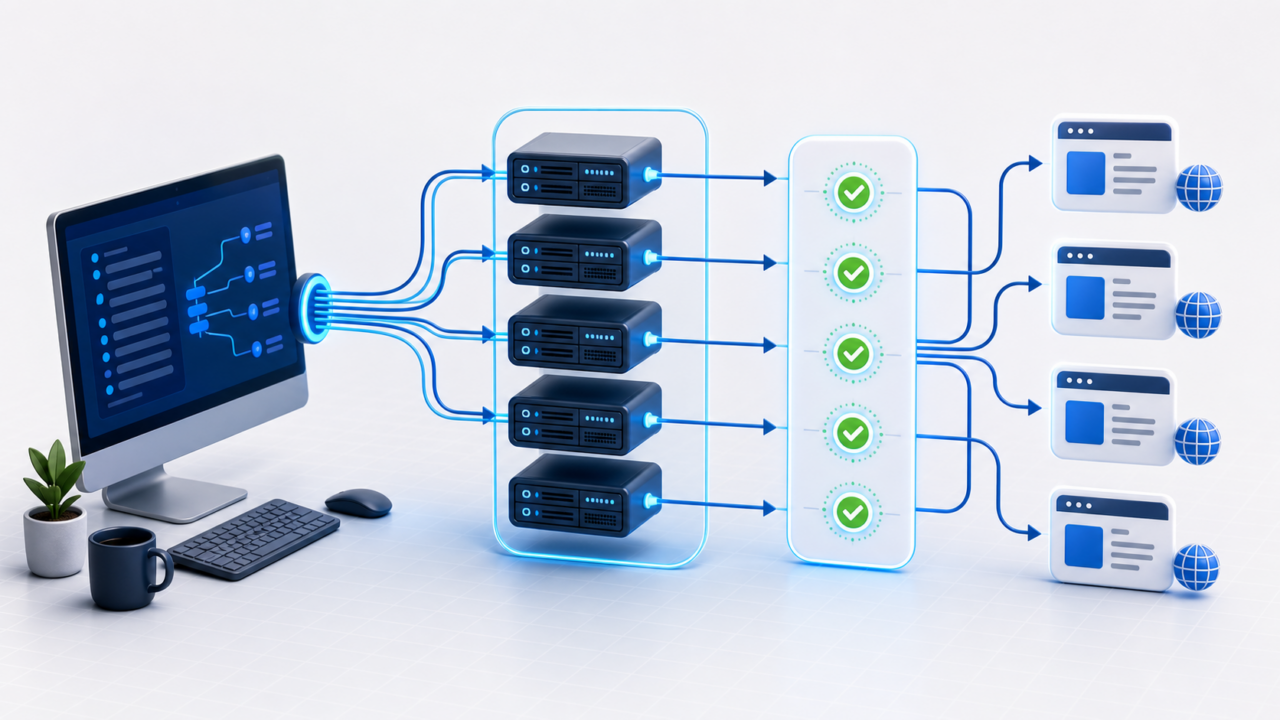
Whether a list is free or paid, test it. Check connection, authentication, exit IP, country, speed, timeout rate and reputation signals. Use the Proxy Tester for connectivity and the Proxy Blacklist Checker for reputation checks.
The difference is that with a paid private or semi-dedicated list, you can usually replace bad endpoints, ask support for help and maintain a stable assignment model. With a public free list, there is often no accountable operator.
Free proxy list vs private proxies
Private proxies cost money because the infrastructure, assignment, support and abuse controls cost money. That does not automatically make every paid proxy good, but it gives you a path to evaluate and maintain quality. Public free proxies give you little control over uptime, reputation or data handling.
If the work matters, compare private proxies with a small test batch first. Measure the same acceptance criteria you would use for a free list, then decide based on reliability instead of price alone.
Related checks before you scale
Before using the advice on a larger workflow, repeat the test from the same network, browser profile, server or automation worker that will run the real job. A proxy result from a laptop does not always match a cloud server, and a browser result does not always match a script. Keep the tested endpoint, protocol, source IP, target site and date in your notes so later failures are easier to compare.
If the proxy will be shared with a team, document who owns the endpoint, which task it supports, which authentication method is active and when it should be reviewed. That small operating record prevents accidental reuse, stale credentials and confusing test results. It also creates natural internal links between troubleshooting, testing and buying decisions instead of treating every proxy problem as a separate incident.
For HTTP-level errors, keep a neutral reference such as the MDN HTTP response status documentation nearby, but judge the final fix in the application that actually uses the proxy. Browser settings, automation libraries, command-line tools and server-side jobs can each handle proxy configuration differently. That is why every recommendation here ends with a real retest, not just a settings change.
A useful final note should include the proxy type, authentication method, observed exit IP, location, target domain, result code and the next owner. This turns a one-time fix into a repeatable operating procedure. Over time, those records also show whether a problem is isolated to one endpoint, one destination, one geographic route or one client configuration. Keep the note short enough that another person can reuse it during the next incident, but specific enough to avoid repeating the same diagnostic work. That balance is what makes troubleshooting content useful after publication.
FAQ
Are free proxy lists safe?
They are risky because the operator, logging behavior, stability and abuse history are usually unknown.
Can free proxies steal data?
A proxy can observe metadata and may manipulate unsecured traffic. Never send private credentials through unknown proxies.
Why do free proxies stop working?
They are overloaded, removed, blocked, misconfigured or abused by many unrelated users.
Are paid proxies always safe?
No. Paid proxies still need testing and responsible use, but they usually provide clearer ownership and support.
What should I use instead of a free proxy list?
Use a small controlled batch of private or semi-dedicated proxies and test them before scaling.
Next steps
If you are currently filtering free lists, move to a controlled test process. Start with the Proxy Tester, check reputation, then compare a small batch of private proxies.